
Thinking Deeply About the Middle East: A History Measured in Centuries, Not Headlines
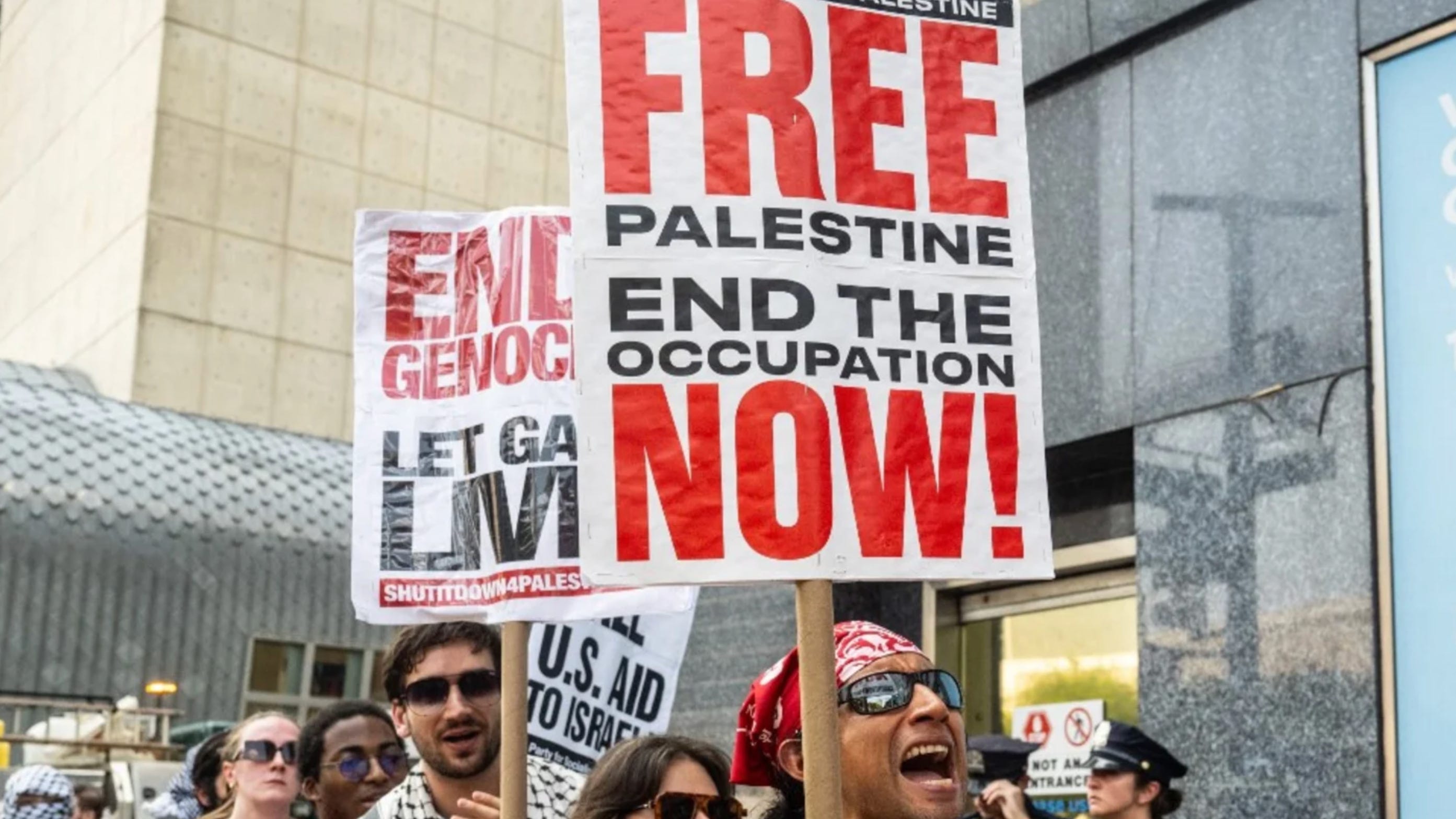
A deeper truth that continues to be misunderstood — no imposed system of governance can succeed if it ignores and refuses to recognize and respect the region’s diversity.

Thinking Deeply About the Middle East: A History Measured in Centuries, Not Headlines
The Danger of Short Memory
Too often, discussions of the Middle East begin in 1948, as though history itself began with the founding of Israel. That framing is not only incomplete but also misleading. It obscures the deeper forces that have shaped the region for thousands of years and leads to simplistic, often misguided attempts to impose solutions on profoundly complex realities.
The Middle East is not defined by a single conflict, a single religion, or a single people. It is a tapestry of civilizations layered over millennia—where empires have risen and fallen, faiths have emerged and divided, and identities have evolved in response to geography, trade, conquest, and survival.
If we are to understand why modern “solutions” so often fail, we must begin much earlier, long before modern borders, long before colonial agreements, and long before 1948.
Ancient Foundations: Geography, Empire, and Perpetual Contest
The earliest conflicts in the Middle East were born not of nationalism, but of geography and power.
Mesopotamia—the “cradle of civilization”—was home to the Sumerians, Akkadians, Babylonians, and Assyrians. These were among the first complex societies, and they fought constantly for control of land, water, and trade routes. To the west, Egypt rose as another great power, often clashing with Near Eastern empires for dominance.
The Persian Empires, particularly the Achaemenids, created one of the first vast, multi-ethnic imperial systems, stretching from the Indus Valley to the Mediterranean. Their conquest by Alexander the Great in the 4th century BCE ushered in another era of cultural fusion and political upheaval.
Later, the Romans and Byzantines ruled much of the region, contending with Persian (Sassanian) rivals for control for centuries. These wars exhausted both empires—creating the conditions for one of the most transformative developments in world history.
The Rise of Islam and the Transformation of Power
In the 7th century, the emergence of Islam reshaped the Middle East.
Within decades of the death of the Prophet Muhammad, Arab-Muslim armies had conquered vast territories from both the Byzantine and Sassanian empires. The region was unified under a new religious and political framework, embodied in successive caliphates.
But unity was short-lived.
The split between Sunni and Shi‘a Islam—rooted in disputes over leadership succession—became one of the most enduring fault lines in the region. This division was not merely theological; it became deeply political, shaping alliances, conflicts, and identities for centuries.
Dynasties rose and fell—the Umayyads, Abbasids, and later regional powers—each layering new conflicts atop old ones. Even during periods of relative stability, rivalry and rebellion were constant features of political life.
The Crusades: Memory, Myth, and Enduring Trauma
Beginning in 1095, a new force entered the region: Western European crusaders.
The Crusades were launched by Christian powers seeking to reclaim Jerusalem and other holy sites. Over two centuries, waves of crusaders established and lost kingdoms in the Levant.
For Europeans, the Crusades were framed as holy wars.
For many in the Middle East, they were simply another in a long series of invasions.
Leaders such as Saladin became symbols of resistance, particularly after the recapture of Jerusalem in 1187.
Though the Crusades ended centuries ago, their memory persists. They remain part of the region’s historical consciousness—often invoked as examples of foreign intrusion, religious conflict, and the dangers of ideological warfare.
Mongols, Fragmentation, and the Rise of New Powers
In the 13th century, the Mongol invasions devastated much of the Middle East, including the destruction of Baghdad in 1258—an event that marked the symbolic end of the Abbasid Caliphate’s golden age.
What followed was fragmentation and the gradual rise of new regional powers.
Among them, the most consequential would be the Ottoman Empire.
The Ottoman Era: Imperial Stability Without Nationalism
For over 600 years, the Ottoman Empire governed much of the Middle East, North Africa, and southeastern Europe.
The Ottomans did not impose modern nationalism. Instead, they ruled through a flexible system that allowed religious communities—Muslims, Christians, Jews—to maintain a degree of autonomy under imperial authority.
This system was not egalitarian, but it was functional. It allowed diverse populations to coexist within a broader political structure.
Importantly, identities during this period were not primarily national. People identified by religion, locality, tribe, or empire—not by the nation-states we recognize today.
This distinction matters because it highlights a key truth:
The modern Middle East was not born organically—it was constructed after the collapse of this imperial system.
World War I and the Destruction of an Order
The collapse of the Ottoman Empire during World War I created a vacuum.
Into that vacuum stepped European powers.
The Sykes-Picot Agreement divided the region into British and French spheres of influence. At the same time, conflicting promises were made to Arab leaders and Jewish communities.
The result was not self-determination, but an imposed structure.
New states—often with little regard for local identities—were created. Borders cut across tribal lands, ethnic groups, and sectarian communities. Political systems were installed without deep legitimacy.
This was not governance by self-determination, but rather simply mapmaking. It was the creation of a fragile order built on external authority rather than internal consent.
The Emergence of Nationalism and the Road to 1948
As colonial control weakened, new forms of identity emerged—particularly Arab nationalism and Zionism.
Under British rule in Palestine, tensions grew between Jewish and Arab communities, each seeking self-determination in the same land.
The United Nations proposed partition in 1947. One side accepted it; the other largely rejected it. War followed.
The founding of Israel in 1948 was both:
A realization of Jewish national aspirations
A catastrophe (Nakba) for Palestinians
These dual realities remain central to understanding the conflict today.
Cold War, Oil, and Expanding Conflict
After 1948, the Middle East became a focal point of global politics.
The Cold War turned the region into a battleground for influence. Coups, proxy wars, and political interventions became common.
Oil added another layer of complexity—bringing immense wealth to some states while intensifying global interest and intervention.
Conflicts multiplied:
Arab-Israeli wars (1956, 1967, 1973)
The Iranian Revolution
The Iran-Iraq War
The Iraq War
Each conflict reshaped alliances, identities, and grievances—often deepening instability rather than resolving it.
The Pattern Repeats: External Solutions, Internal Realities
Across all these centuries, one pattern is unmistakable:
Outsiders repeatedly attempt to impose solutions.
Those solutions repeatedly fail.
From crusaders to colonial powers to modern superpowers, external actors have treated the region as something to be shaped according to their interests.
But the people of the Middle East are not abstractions.
They are:
Arabs, Persians, Turks, Kurds, Jews, Armenians, and more
Sunni and Shi‘a Muslims, Christians, Jews, and others
Communities with distinct histories, identities, and aspirations
No imposed system can succeed if it ignores this diversity.
Modern Echoes: The Persistence of Old Mistakes
Today, we see familiar patterns once again.
Leaders such as Donald Trump and Benjamin Netanyahu appear to believe that force—bombing campaigns, coercion, and unilateral decisions—can produce outcomes that diplomacy and legitimacy have not.
History offers a clear warning:
Military force can change conditions.
It cannot resolve identity.
It cannot create legitimacy.
It cannot impose peace.
Instead, it often:
Hardens divisions
Strengthens extremists
Deepens cycles of violence
The Deeper Truth: Diversity Must Be Lived With, Not Eliminated
The Middle East’s diversity is not a problem to be solved. It is a reality to be managed.
Lasting peace requires:
Recognition of multiple identities and narratives
Mutual security and dignity
Political systems seen as legitimate by those who live under them
Space for self-determination
No single group’s aspirations can erase another’s.
Conclusion: Learning From History—or Repeating It
The history of the Middle East is not a story of inevitable conflict. It is a story of repeated failures to build inclusive, legitimate political orders.
Time and again, leaders have chosen:
Domination over coexistence
Imposition over consent
Force over diplomacy
And time and again, those choices have failed.
A Call to Action
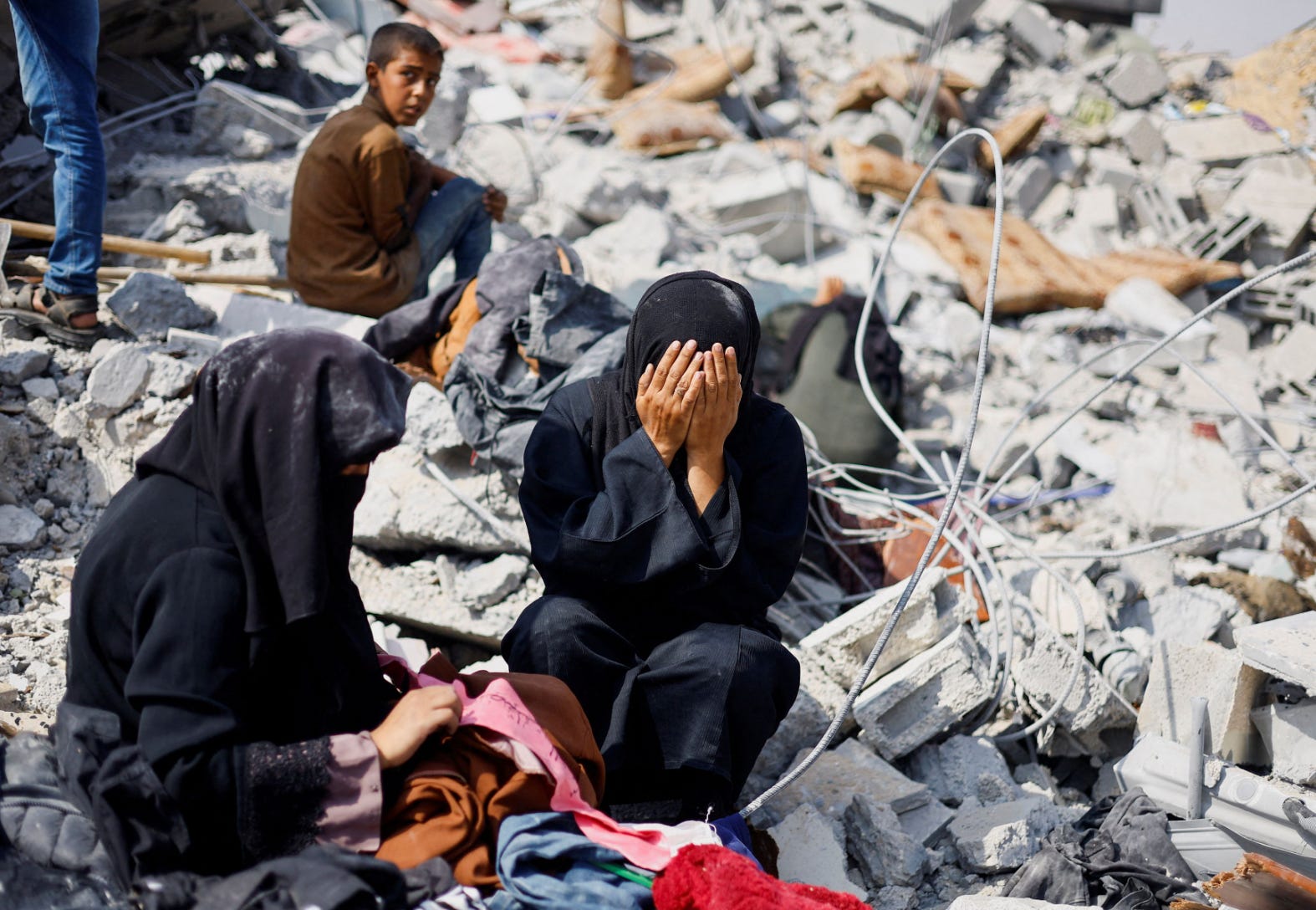
We cannot bomb the Middle East into peace. We cannot impose a solution to the regional conflict on the diverse people of the region from outside powers.
If we are to break this cycle, we must demand a different approach:
Demand historical literacy in our leaders and ourselves
Reject simplistic narratives that ignore centuries of complexity
Insist on diplomacy rooted in inclusion, legitimacy, and respect
Challenge the notion that war is a substitute for thoughtful policy
Most importantly, we must remember this essential insight:
People desire freedom, liberty, and self-determination.
No map drawn in a distant capital, no bombing campaign, and no would-be monarch can override that truth.
History has shown us what does not work.
The question now is whether we are wise enough to choose something better.
I do not propose a solution to the present conflict or the region’s complexity and diversity. But I recognize that we cannot bomb the Middle East into peace. Conflicts are a terrible solution for conflict. What I suggest is a process that recognizes and respects the diversity and complexity of the Middle East region and the right of all in the region to self-determination. Legitimate governance for the people of the region cannot be be imposed by yet another outside invading force. Those who fail to learn from history are doomed to repeat its failures. We are simply the latest to fail to learn that lesson.